
"After Be Mindful, at work I didn't have the issues with concentration. I was able to put into practice all the techniques so that I didn't feel so panicky."

Farah
London, UK

Challenge
- Very low & depressed after switching to a permanent role working with different teams
- Severe anxiety, panic attacks & claustrophobia
- Concentration issues & physical sickness
- Feared overwhelm when dealing with patients
- Signed off work by GP
Solution: Mindfulness-Based Cognitive Therapy digital therapeutic
- Mental health nurse recommendation of London's Good Thinking mental health apps service
- Specialised self-paced MBCT programme selected
- Accessible, effective digital support tool
- Flexible and on-demand programme on her smartphone
88%
Reduction in anxiety
69%
Reduction in depression
46%
Reduction in stress
Summary
Background
Diagnostic Radiographer, Farah, began to feel very low and depressed after switching to a permanent role working with different teams. She struggled to cope at work, suffering from worsening concentration issues, severe panic attacks, claustrophobia and physical sickness due to anxiety for around 6 months.
Dealing with patients was difficult as she didn’t want to feel overwhelmed in that situation. Her workplace allowed her to take extended breaks but these were difficult to fit around patients and she needed to take sick days. After a few months she was signed off work by her GP.
In the past, Farah was prescribed amitriptyline for her sickness and undertook an extended period of therapy sessions. In this period of crisis, Farah's GP prescribed sertraline and arranged an appointment with a mental health nurse due to the drug's side effects. The nurse provided a weblink to London's since decommissioned Good Thinking service that provided fully funded digital mental health support tools to Londoners.
Be Mindful
Farah selected the Be Mindful programme via Good Thinking, finding it very easy to start and complete. She found what she learnt from the programme more effective than therapy for managing her symptoms. She quickly noticed a reduction in her panic attacks, being able to pass through a panic attack much quicker than before, and the sickness disappeared. On returning to work, instead of needing hour-long breaks, she would resume her duties after 10 to 15 minutes of practicing breathing techniques and mindfulness when required.
The self-paced nature of the programme and short-from tutorials made completing the programme accessible, manageable and not overwhelming. Farah used the mindful walking techniques on her way to work and practicing mindfulness and being able to be in the present moment helped Farah to remain calm and perform her duties.
"When I told my line manager about this programme, she said 'I can see how it's helped you because you're not getting so emotional.' I had a lot of colleagues come up to me and say, 'oh, you're a different person'."
Farah
London, UK
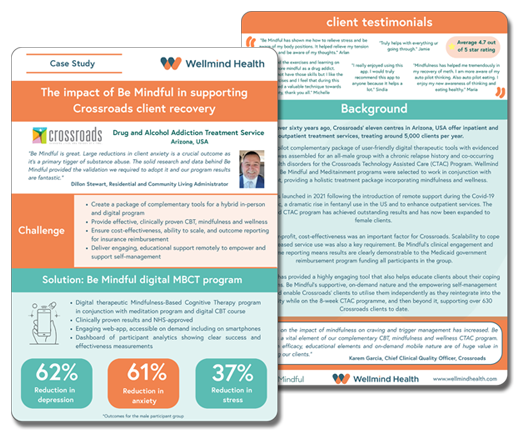
Read more from the Case Study library
Discover more success stories about overcoming common challenges with our digital therapeutic solutions.